
Reviewed · STARGAZING & NIGHT PHOTOGRAPHY
Professional Stargazing in Moab
Moab at night can feel like a new world. This stargazing experience is built around certified dark skies, guided viewing, and comfort so you can actually enjoy the sky instead of fighting chairs and cold feet.
The two things I’d put at the top are the setup: each guest gets a body-hugging zero-gravity pod plus blankets and binoculars. And the show is run by an astronomer with telescopes and laser pointers, so you’re not just looking up—you’re learning what you’re seeing, object by object.
One thing to consider: you need to be able to stand for about 30 minutes, and there’s no restroom provided. If you’re tight on mobility or you need easy restroom access, plan carefully before you book.
In This Review
- Key highlights worth knowing
- Moab’s certified dark skies: what you’re really paying for
- The 2-hour flow: solar system warm-up to the sky show
- Zero-gravity pods and binoculars: comfort that helps you see
- Telescopes, laser pointers, and the “what is that?” factor
- Hot drinks and small comforts that make a real difference
- Price and value: is $200 per person worth it?
- Getting there, using the restroom, and weather reality
- Who this tour is best for (and who should rethink it)
- Should you book Professional Stargazing in Moab?
- FAQ
- How long is the Professional Stargazing in Moab experience?
- What does the tour cost?
- What time does it start?
- What’s included in the tour?
- What is not included?
- Where do I meet the group?
- Is there a group size limit?
- Is the tour offered in English, and are service animals allowed?
- Does the experience require good weather?
Key highlights worth knowing
- Zero-gravity pods (Yogibo loungers): you lounge in your own pod with a blanket and binocs.
- Astronomer-led 2-hour program: telescopes and laser pointers help you find targets fast.
- Laser-guided sky navigation: you’re shown constellations and specific celestial objects during the session.
- Hot beverage station: coffee, tea, and hot chocolate to keep the night feeling more civilized.
- Small group size (max 18): more time for guidance and less crowding around the equipment.
- Moab’s internationally certified dark skies: the whole pitch is that the sky conditions are part of the product.
More dark-sky nights over the desert
- Astro-Photo, Hiking and Stargazing Tour in Arches National Park★ 5.0 · 63 reviews
- Moab: The Windows Astro-Photography and Stargazing Hike★ 4.8 · 36 reviews
- Sunset and Night Photography in Arches National Park★ 5.0 · 23 reviews
- Milky Way Photography in Arches National Park★ 4.0 · 4 reviews
Moab’s certified dark skies: what you’re really paying for
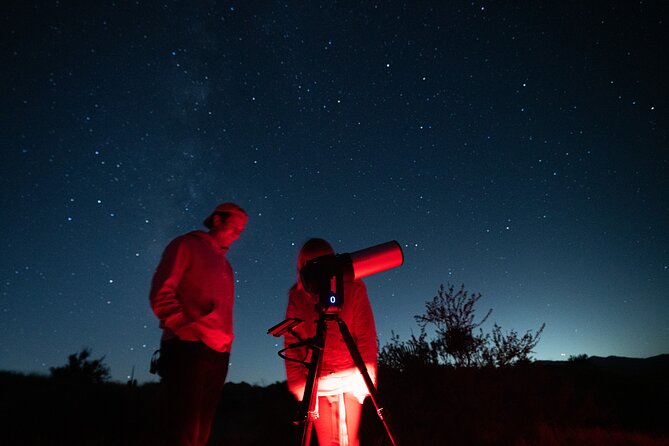
Moab’s big advantage isn’t just that it’s dark at night. It’s that the sky is considered internationally certified for darkness, which matters because stars and faint objects need low light pollution to show up well. That certification is the quiet backbone of the experience: it’s what turns stargazing from a casual activity into a serious viewing night.
This tour also leans into professional viewing tools. You don’t just get a vague “look up.” You get telescopes, plus a guide who uses laser pointers to steer your attention around the sky. That combination is important for first-timers. Without help, you can end up watching the same “bright bits” while missing the stuff you came for.
Finally, the comfort level feels designed for adults, not just kids on a school trip. The pods and blankets mean you can settle in and actually stay focused for the full program, which is usually where stargazing tours win or lose their charm.
The 2-hour flow: solar system warm-up to the sky show
The night starts before the main viewing, with a short walk through a scale model of the solar system. The goal is simple: get your bearings in a way your brain can hold onto. As astronomical twilight sets, the guides use that model to orient you to the planets and your place in the neighborhood of space.
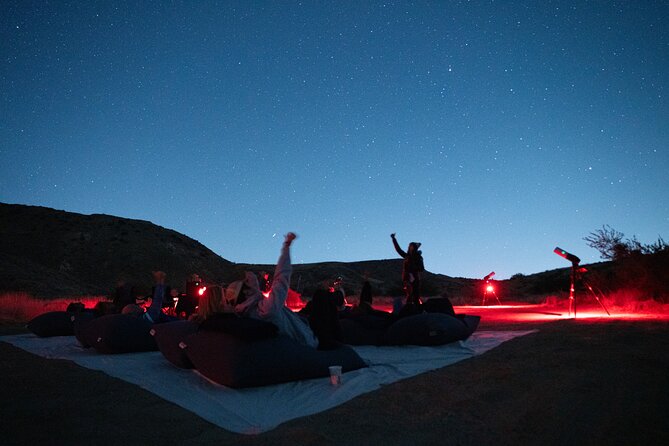
Then you move into viewing mode. Each guest settles into a zero-gravity pod, with a blanket and a pair of astro-binoculars. That matters because it keeps the group from constantly shuffling around. Stargazing works best when you can stay steady and relaxed while your eyes adjust.
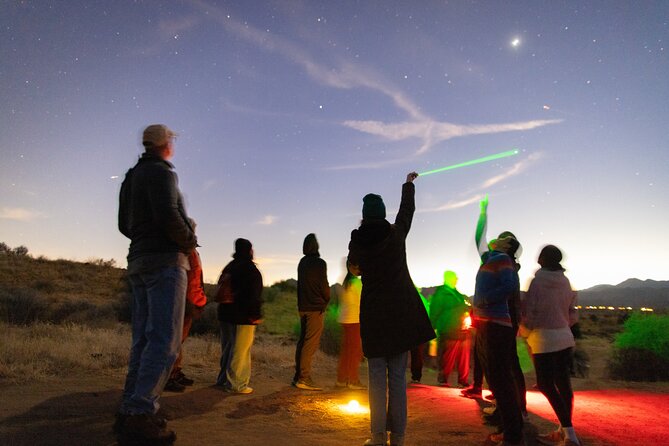
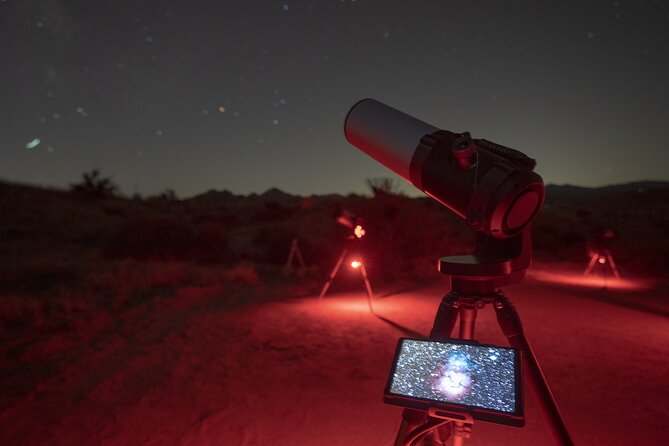
From there, the astronomer runs a full 2-hour program. You’ll have laser pointers and state-of-the-art telescopes guiding you around the constellations and objects in the night sky. The tour also includes close-up telescope viewing of things like galaxies, nebulae, and clusters, so you’re not limited to what you can see with your own eyes.
What I like about this schedule is that it respects your attention span. It starts with meaning (the solar system model), then it shifts to sensory focus (your pod and binoculars), and finally it becomes a guided “find and see” experience with telescopes.
Zero-gravity pods and binoculars: comfort that helps you see
Stargazing sounds easy until you try it for real. If you’re uncomfortable, you stop paying attention. That’s why I think the pod setup is a smart piece of value in this tour.
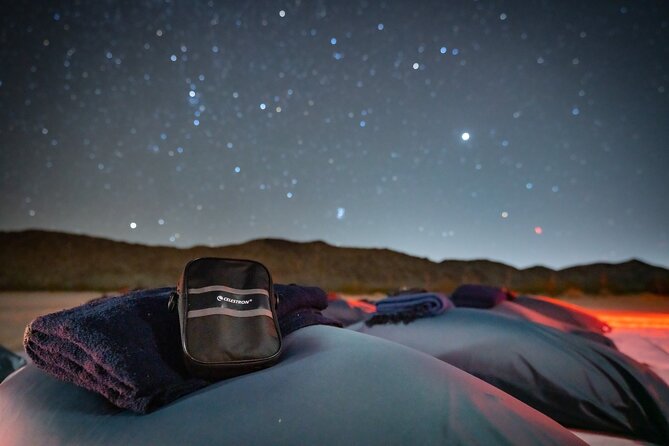
You lounge in your own zero-gravity pod, and it’s described as conforming to your body to reduce pressure points. You’re not squeezed into a folding chair. You also get blankets, which keeps the experience from turning into a “tough it out” contest.
Then there are the astro-binoculars. Binoculars aren’t the same as telescopes, but they’re a big deal for beginners because they let you see more than naked-eye stars while you’re waiting for your eyes to adjust. With the guide’s laser pointers, the binocs become tools, not just souvenirs.
One practical consideration: this tour is not recommended if you can’t stand for about 30 minutes. That suggests there’s some walking involved around the solar system model and/or initial setup before you fully settle. If you’re on the edge, it’s worth thinking through your own comfort with short standing time.
Telescopes, laser pointers, and the “what is that?” factor
This is where the tour turns from atmosphere into astronomy. The guides use laser pointers to guide you around constellations and specific objects. That reduces the guesswork. You’ll know what you’re pointing at, rather than scanning the sky and hoping you found the right target.
The program also uses telescopes to give you an up-close view of celestial objects such as galaxies, nebulae, and clusters. In other words, you get both the big-picture navigation (constellations) and the zoomed-in targets (deep-sky objects). That blend is great for people who want wonder, but also want clarity.
A note from a highly praised experience: one guest’s astronomer was Devon, and she was described as entertaining and able to enhance the visit by pointing out constellations and showing distant galaxies through digital telescopes. That lines up with how this tour is structured—someone who can tell stories while also guiding your eyes to the right spots.
If you care about learning (even just a little), this tour’s format supports that. The best stargazing nights aren’t only about seeing—they’re about understanding what you’re looking at.
Hot drinks and small comforts that make a real difference
Stargazing is a long, still activity. Even a couple of hours can feel different if you’re hungry or distracted. This tour provides a hot beverage station, including hot chocolate, coffee, and tea.
That might sound like a small detail, but it can make the night feel easier to enjoy, especially since there’s no restroom included. When a tour includes food or drinks, I usually treat it as a sign they’ve thought about comfort as part of the overall experience, not just the sky.
Also, because you’re in your own pod, you don’t have to keep getting up and walking around to stay comfortable. You can focus on the sky and use the binoculars when it makes sense, rather than constantly negotiating where to sit and how to settle.
Price and value: is $200 per person worth it?
At $200 per person for about two hours, this isn’t a budget activity. So the value question comes down to what’s included and how it’s delivered.
Here’s what you’re paying for, in practical terms:
- Equipment and expertise: telescopes, astro-binoculars, and an astronomer guiding you.
- Comfort: your own zero-gravity pod, plus blankets.
- Atmosphere with real conditions: Moab’s internationally certified dark skies.
- A full guided program: laser pointers plus telescope viewing of deep-sky objects.
- Thoughtful extras: hot beverages during the session.
If you tried to replicate this yourself, you’d likely spend money on transportation, equipment, and possibly a guide, and you’d still be dealing with the learning curve of finding things in the dark. Here, the tour compresses that learning and removes the guesswork.
The group size also matters for value. With a maximum of 18 travelers, you should expect a less crowded feel than big group tours where it’s hard to see equipment or follow directions.
The drawback is also part of the value math: because transportation isn’t provided, you’re responsible for getting to the meeting point. That doesn’t make the experience bad, but it does mean your total cost might be higher if you’re coming without a car.
Getting there, using the restroom, and weather reality
Let’s talk logistics in plain English, because it affects your night more than you might expect.
First: transportation isn’t included. You’ll need to handle your own ride to the observation site. The meeting point is listed at a plus code near La Sal, UT (8HFF+7V / 8HFF+7VP La Sal, UT, USA). The tour ends back at the starting point, so plan your return the same way.
Second: there’s no restroom. That’s not a deal-breaker for everyone, but for a two-hour nighttime experience, it’s a clear heads-up.
Third: the activity requires good weather. If it’s canceled due to poor weather, you’ll be offered a different date or a full refund. That’s an important condition because clear skies are the product here, not just the bonus.
Finally, service animals are allowed. And the tour is offered in English, with a mobile ticket for entry.
Who this tour is best for (and who should rethink it)
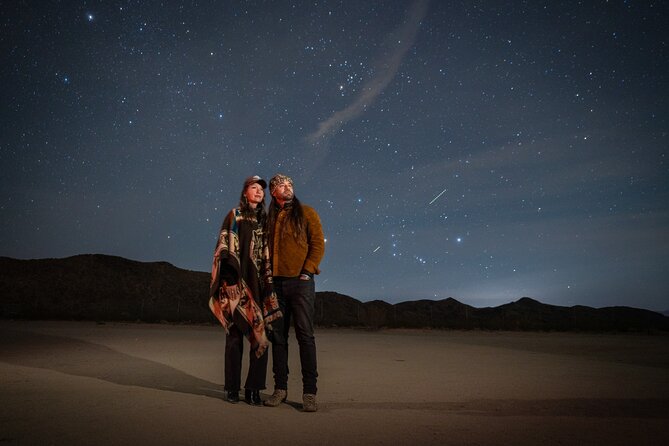
This is best for people who want a guided astronomy night in real dark skies, without the hassle of figuring out equipment and locations on your own. If you’re coming to Moab specifically for stargazing, or you want an activity that feels different from the usual hikes and views, this fits nicely.
It’s also a strong choice for couples and small groups because the setup is personal (your own pod) while the guidance remains shared. And since the group is capped at 18, you’re less likely to feel like you’re watching from far away.
You might want to rethink it if:
- You can’t stand for around 30 minutes.
- You need a restroom on-site.
- You don’t have an easy way to get to the La Sal meeting point, since transportation isn’t provided.
If you’re comfortable with a short standing stretch, okay with no restroom, and ready to spend two hours focused on the sky, this tour looks like a good match.
Should you book Professional Stargazing in Moab?
If you want a stargazing experience that’s built for actual viewing—telescopes, laser-guided navigation, and deep-sky targets—this looks like a solid choice. The biggest wins are the certified dark skies setup and the comfort design: your pod, blankets, binoculars, and hot drinks make it easier to stay present for the whole program.
Book it if:
- You like guided experiences where you learn what you’re seeing.
- You want professional telescopes and not just casual star-watching.
- You’d rather sit comfortably than keep adjusting in the dark.
Consider skipping (or planning carefully) if:
- You need on-site transportation or a restroom.
- You have mobility limits that make standing for about 30 minutes difficult.
- Weather conditions are uncertain for you and you’d rather choose an indoor or fully weatherproof option.
Overall, for $200, you’re buying more than a look at stars. You’re buying a structured astronomy night that removes the guesswork and keeps you comfortable while you explore Moab’s dark-sky sky.
FAQ
How long is the Professional Stargazing in Moab experience?
It lasts about 2 hours.
What does the tour cost?
The price is $200.00 per person.
What time does it start?
The tour start time is not listed in the provided information, but it begins at a meeting point near La Sal, UT.
What’s included in the tour?
Hot beverages (hot chocolate, coffee, and tea), telescopes, Yogibo lounger-style zero-gravity pods, blankets, astro-binoculars, and an astronomer/guide.
What is not included?
Transportation to the observation site and a restroom are not included.
Where do I meet the group?
The meeting point is listed near La Sal, UT with the plus code 8HFF+7V / 8HFF+7VP.
Is there a group size limit?
Yes. The maximum group size is 18 travelers.
Is the tour offered in English, and are service animals allowed?
Yes, it is offered in English, and service animals are allowed.
Does the experience require good weather?
Yes. The tour requires good weather, and if it’s canceled due to poor weather you’ll be offered a different date or a full refund.
More Tour Reviews in Moab
- HIGHLY RATED U-DRIVE Moab Hell’s Revenge UTV Off-Road Adventure
★ 5.0 · 3,107 reviews - Arches National Park 4×4 Adventure from Moab
★ 5.0 · 2,014 reviews - Moab: Colorado River Dinner Cruise with Music and Light Show
★ 4.5 · 1,302 reviews - You-Drive 4×4 UTV Adventure–Hell’s Revenge & Fins N’ Things, Moab
★ 5.0 · 1,114 reviews - Canyonlands National Park Half-Day Tour from Moab
★ 5.0 · 1,074 reviews
Under Moab Dark Skies
- Astro-Photo, Hiking and Stargazing Tour in Arches National Park
★ 5.0 · 63 reviews - Moab: The Windows Astro-Photography and Stargazing Hike
★ 4.8 · 36 reviews - Sunset and Night Photography in Arches National Park
★ 5.0 · 23 reviews - Milky Way Photography in Arches National Park
★ 4.0 · 4 reviews
Fresh Off the Trail: Newest Moab Reviews
- Discover Moab Rappelling on a Private Canyoneering Adventure
★ 5.0 · 3 reviews - Moab Custom 4 Seat Kawasaki KRX® 1000 Off Road UTV Rental
★ 5.0 · 3 reviews - Moab: Half-Day Rock Climbing Adventure
★ 5.0 · 3 reviews - Moab Half Day Kayaking Trip – Colorado River
★ 4.6 · 3 reviews - From Moab: Rock of Ages Moderate Rappelling Obstacle Course
★ 5.0 · 3 reviews - Professional Stargazing in Moab
★ 3.5 · 3 reviews
Stargazing & Night Photography, compared.
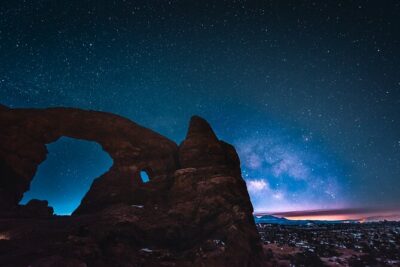 ★ 5.0Astro-Photo, Hiking and Stargazing Tour in Arches National ParkFrom $17563 reviews
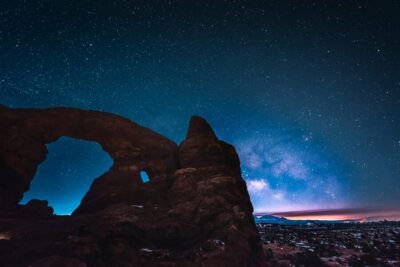 ★ 4.8The Windows Astro-Photography and Stargazing HikeFrom $17536 reviews
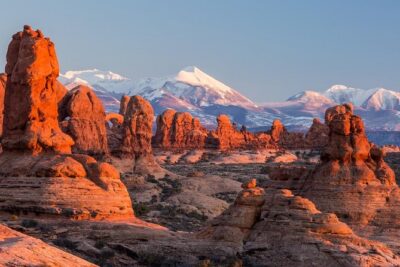 ★ 5.0Sunset and Night Photography in Arches National ParkFrom $37523 reviews
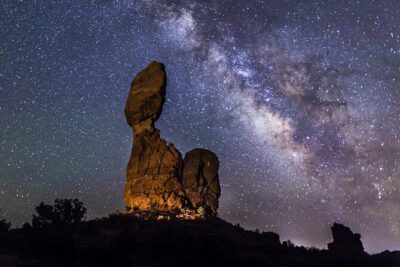 ★ 4.0Milky Way Photography in Arches National ParkFrom $2754 reviews
Browse the lists this tour appears in