
Reviewed · ARCHES NATIONAL PARK TOURS
Self Guided Audio Tour in Arches and Canyonlands
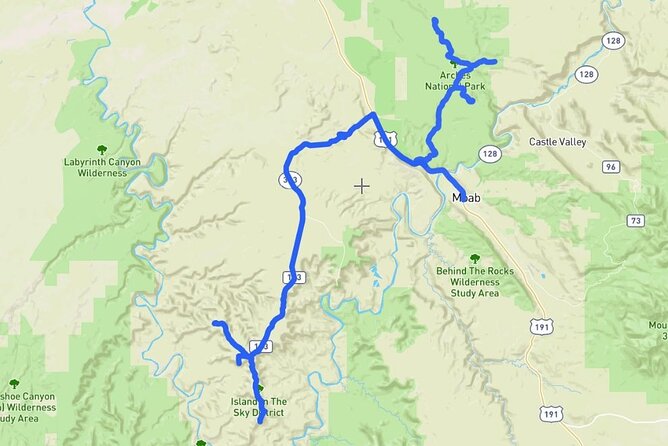
Arches and Canyonlands are best felt at your own tempo. This self-guided audio route in Moab uses location-based narration on your phone, so you hear the right story when you arrive at the next viewpoint.
What I like most is how the tour feels personal without adding stress. I like the combination of auto-playing directions and the way the narration nudges you toward the must-sees if you are short on time. I also like that it’s designed as a road trip format: you drive, you listen, you stop, you move on.
One consideration: the parks’ entrance fees are not included, so you still need to plan for that. And since this runs on your phone and GPS, you’ll want a full battery and a charger in the car.
In This Review
- Key points worth knowing before you go
- How the GuideAlong GPS tour works from Moab
- Value check: $24.99 per group and what you’re really buying
- Arches National Park: from easy viewpoints to the Delicate Arch moment
- Stop 1: Arches National Park (smart start, flexible route)
- Stop 6 onward: The Windows and quick walks that stack the wow-factor
- Stop 7: Delicate Arch (celebrity-level iconic)
- Stop 8: Park Avenue Trail (paved, then optional down into the canyon)
- Stop 9: Skyline Arch (short walk, better light if you time it)
- Canyonlands Island in the Sky: Mesa Arch light and the views you can’t rush
- Stop 2: Island in the Sky (plan for sunrise or sunset)
- Stop 10: Grand View Point Overlook (southern edge, big canyon drop)
- Stop 11: Green River Overlook (sunset with Powell vibes)
- Stop 12: Mesa Arch (classic sunrise window, crowd reality)
- Landscape Arch and Devils Garden: the long span walk with one important catch
- Stop 3: Landscape Arch (94m span, thin at the center)
- Stop 4: Devils Garden Trailhead (fins, then arches)
- Double Arch and the Windows loop: easy walks that stack your arch time
- Stop 5: Double Arch (small area, quick payoff)
- Stop 6: Windows (the framed-feel arches)
- Canyonlands detours: Upheaval Dome, Aztec Butte ruins, and The Needles
- Stop 13: Upheaval Dome (mystery on the ground)
- Stop 14: Aztec Butte Trail (Ancestral Puebloan granaries)
- Stop 15: The Needles (spires, fewer crowds, scenic drive)
- When this audio tour really shines (and when it doesn’t)
- My practical game plan for a smooth Arches + Canyonlands day
- Should you book this Moab self-guided audio tour?
- FAQ
- Is this tour self-guided, or do I get a live guide?
- Do I need internet or cell service during the tour?
- Are national park entrance fees included in the price?
- How much does it cost, and how many people can use one purchase?
- How long does the tour take?
- What language is the narration offered in?
- Can I cancel if my plans change?
Key points worth knowing before you go
- Location-based autoplay: narration plays as your phone detects you’ve reached the next stop
- Works offline: download ahead, then tour without relying on cell service
- $24.99 per group (up to 8): one purchase covers everyone in the vehicle
- Flexible pacing: start, stop, and resume on your schedule, even on different days
- Practical trail guidance: commentary includes what to expect at hikes like Devils Garden and Park Avenue
- No park entry fees included: you pay the parks separately
More ways through Arches, gate to gate
- Arches National Park 4×4 Adventure from Moab★ 5.0 · 2,014 reviews
- Arches National Park Back Country Adventure from Moab★ 5.0 · 633 reviews
- HIGHLY RATED Arches National Park Sightseeing Tour From Moab Utah★ 5.0 · 474 reviews
- From Moab: Half-Day Arches National Park 4×4 Driving Tour★ 4.8 · 440 reviews
How the GuideAlong GPS tour works from Moab

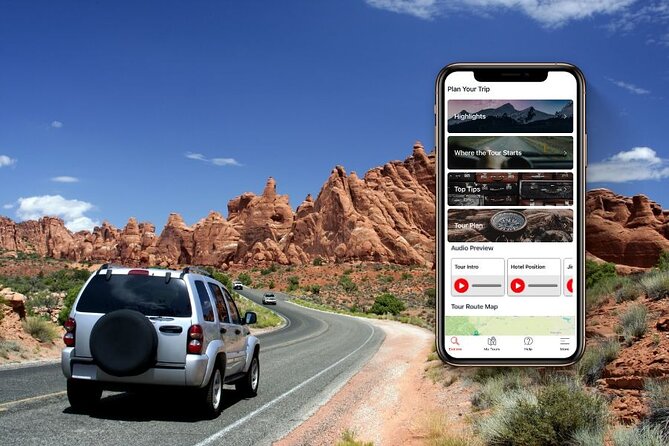
This tour is built for driving. After you book, you get an email and text with instructions to download the GuideAlong app and redeem your voucher code. Then you load the Arches and Canyonlands tour inside the app under My Tours.
Once the tour is running, the magic is simple: audio commentary plays automatically based on your GPS location. You can start and end the tour anywhere along the route, and you can pause it, then resume later. The tour is also marked as private, so it’s just your group in your car—no timing pressure, no joining a bus crowd.
You’ll also get in-app tools like trip planners and PDFs, plus web access. That matters because Arches and Canyonlands are huge and time gets eaten fast once you add parking and short hikes. With a tour that tells you what’s coming next, you spend your brain on which photo and which trail, not on navigation.
Finally, there’s real value in the offline design. The tour says it can be used without internet or cell service once you’ve downloaded it. That’s key in Utah parks, where signal can be spotty and your phone battery is already working overtime.
Value check: $24.99 per group and what you’re really buying
At $24.99 per group up to 8, this is a bargain if you’re traveling with family or friends. Most people on a Moab trip end up paying for separate tours or separate guides. Here, one purchase covers your whole vehicle, which can make this cheaper than “paying per person” even if you’re doing one main day plus a bonus stop.
What you’re buying is not an attendant in the passenger seat. You’re buying a professionally narrated, location-aware audio guide (hosted under GuideAlong, with GyPSy Guide branding). You still do the driving and your own hike decisions. But the narration aims to keep you pointed toward the right views, and it adds context you might otherwise skip while rushing between parking lots.
What you’re not buying: national park entrance fees and national park passes. Also, the tour doesn’t include reservations. So budget for park access separately, and don’t plan on using this as your entry ticket.
Arches National Park: from easy viewpoints to the Delicate Arch moment
Arches is the park most people picture first, and it’s also where audio guidance makes a big difference. With 2,000-plus arches scattered around, you can easily drive past something important if you’re only following the car’s GPS.
A great strategy is to treat Arches as a series of “clusters” rather than a checklist. The tour’s flow is designed like that: you’ll move from classic scenic overlooks into the walkable arch zones, then end with the iconic moment most people come for.
Stop 1: Arches National Park (smart start, flexible route)
The tour begins with an introduction to the geology—how features like The Windows form over time, and how weather slowly reshapes the rock. It also talks about characters connected to these places and the fragile ecosystem that supports a surprising amount of diversity.
This is where the tour helps you make real choices. If you only have a limited schedule, it leads you toward the big hitters like Double Arch and Landscape Arch. If you have more time, it points you toward other areas such as Skyline Arch and Devils Garden.
If you’re a fast mover, this opening sets a good mental map. If you’re a slow mover, it helps you decide what to do next without feeling lost.
Deeper into Canyonlands and the Island in the Sky
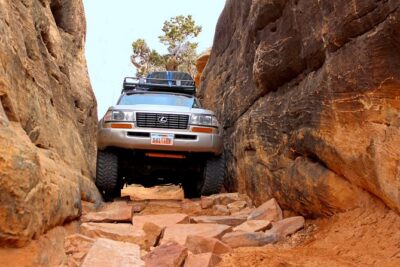
Stop 6 onward: The Windows and quick walks that stack the wow-factor
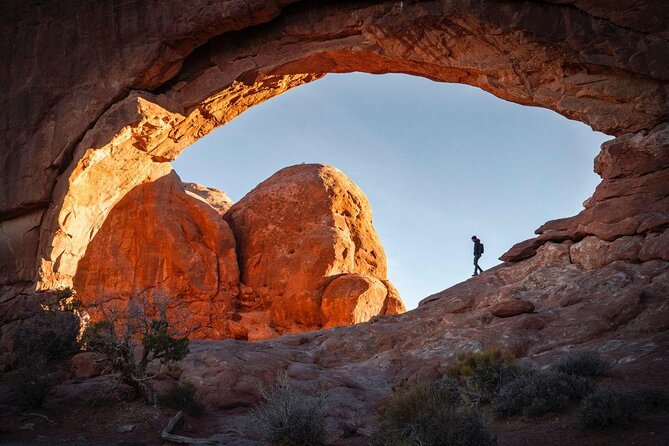
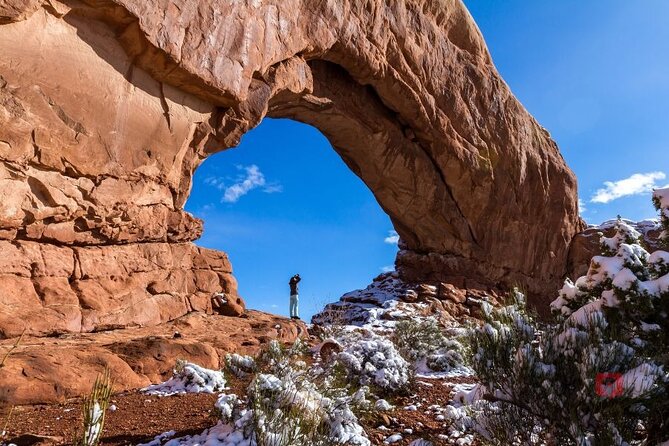
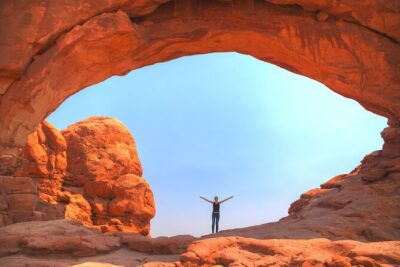
The Windows area is built for short time and multiple arches in close proximity. You can see how the rock forms feel like you’re looking into another world—because you literally frame them through rock.
The tour also helps you connect the dots between arch names and where to find them, and it keeps your stops efficient. That matters here, because parking time and daylight both run out.
Stop 7: Delicate Arch (celebrity-level iconic)
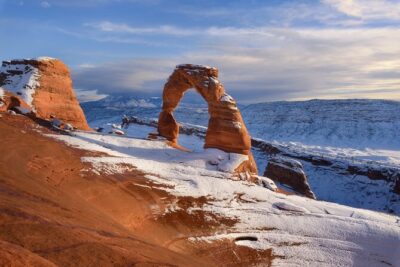
Delicate Arch gets the full “this is the Utah symbol” treatment. The tour drives you to the viewpoint, and it also offers the option to get closer with an uphill hike.
If you only do one “arch at close range” walk in Arches, Delicate is the usual pick. The audio makes the experience feel like an event rather than just a photo stop.
Stop 8: Park Avenue Trail (paved, then optional down into the canyon)
Park Avenue is one of those rare hikes that feels like a city skyline—sheer cliffs and rock towers rising up on both sides. The tour describes an easy paved trail to the Park Avenue viewpoint.
Then there’s an optional continuation: you can go further down toward the Courthouse Towers. It’s a real physical change from a simple stroll, so this is a good place to decide based on your group’s comfort level.
Stop 9: Skyline Arch (short walk, better light if you time it)
Skyline Arch is described as a short, easy walk—about a half mile—and the tour recommends saving it for late afternoon for the best photos with low sun.
This is a solid example of how an audio tour can be more than narration. It’s also timing advice for people who don’t want to study a sunrise/sunset chart all day.
Canyonlands Island in the Sky: Mesa Arch light and the views you can’t rush
Canyonlands is different from Arches. Even though it’s across the valley, it feels more remote and layered. The tour’s Canyonlands section focuses on the Island in the Sky District via Grand View Point Road, which gives you sweeping overlooks and classic photography stops.
Stop 2: Island in the Sky (plan for sunrise or sunset)
If you care about the famous photo—sunrise through Mesa Arch—the tour nudges you to get up early. If you start later, it suggests arranging time so you can still catch a spectacular sunset.
This is where planning helps. Canyonlands’ overlooks are not one quick viewpoint each; you’ll want enough time to park, walk, and actually enjoy the changing light, not just snap and go.
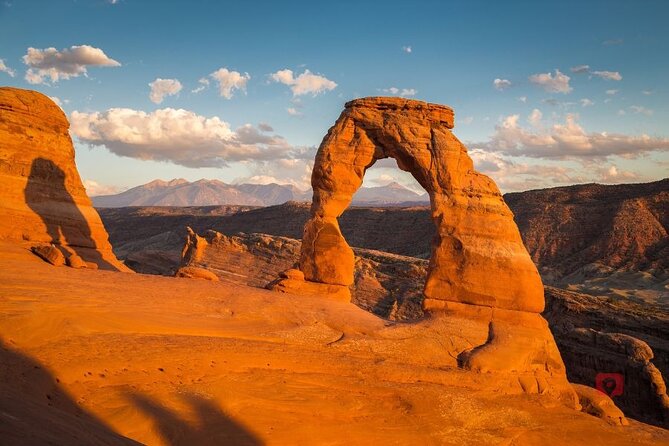
Stop 10: Grand View Point Overlook (southern edge, big canyon drop)
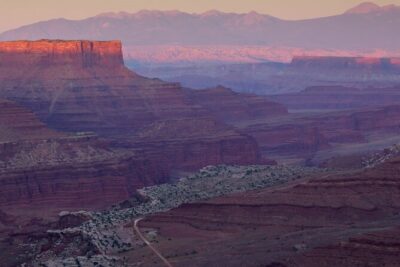
From Grand View Point, you look down across a maze of canyons. The audio frames it as a place where you’re peering into an enormous span of Earth’s history—practical as much as poetic. You can understand why people keep coming back for different seasons and different times of day.
Stop 11: Green River Overlook (sunset with Powell vibes)
Green River Overlook is pitched as a superb sunset spot with panoramic views. The tour also points to the historical angle—naming it for the Green River and connecting it to the story of John Wesley Powell testing out his wooden boats before going into the unknown canyon country.
Even if you’re not a history person, these little connections make the scene feel less like a random pile of rocks and more like a place with human stories layered on top.
Stop 12: Mesa Arch (classic sunrise window, crowd reality)
Mesa Arch is described as THE classic image for Canyonlands. You’ll peer through the arch window at the canyon views, and on clear days you can see the Le Sal Mountains in the distance.
The tour also warns you to expect photographers jostling for space—especially around sunrise. That’s not a reason to skip it, but it’s a reason to plan your timing and keep your expectations realistic.
Landscape Arch and Devils Garden: the long span walk with one important catch
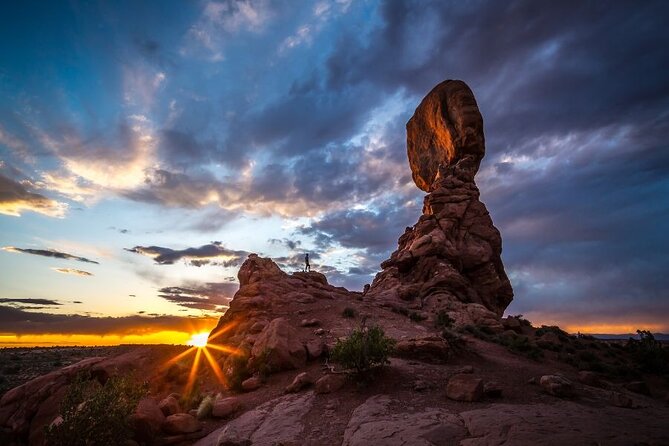
This part is where Arches feels more like hiking than just driving. The tour includes a long-span arch and a hike through a rock maze zone that’s known for its fins and arch formations.
Stop 3: Landscape Arch (94m span, thin at the center)
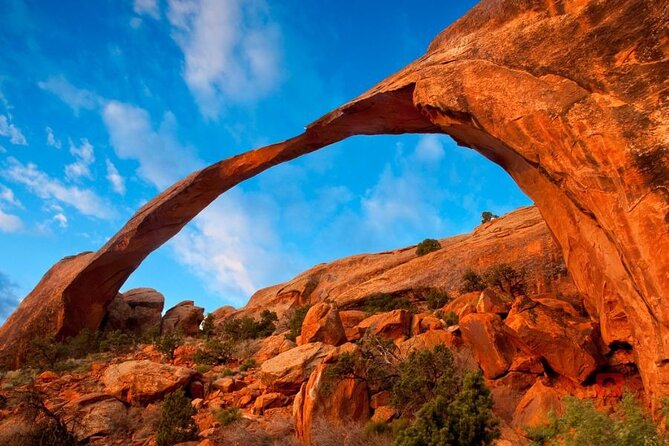
Landscape Arch is one of the big ones—over 300 feet (94m) long—with a very thin center point. The audio also notes what happened in 1991: debris from a 60-foot slab fall. Since then, the trail beneath the arch is closed.
That detail matters. Don’t count on walking underneath the arch or following a path that isn’t open anymore. Use this as a reminder to check what you can access on arrival and let the audio guide you to safe viewpoints.
The tour suggests early morning for color. That’s a good call here because you’ll often get softer light on the rock textures before the sun gets high.
Stop 4: Devils Garden Trailhead (fins, then arches)
Devils Garden is where the park’s rock walls show up in narrow, fin-like forms before erosion turns them into arches. The audio links it to the idea of multiple arch types in one area, so you can see how the park’s “shapes” relate to each other.
This stop also pairs well with Landscape Arch. If you’re planning one hike day in Arches, it’s a strong combo: different viewpoints, different rock formations, and a logical sense of progression.
Double Arch and the Windows loop: easy walks that stack your arch time
If you want maximum arch density without maximum hiking, this is where your day can shine.
Stop 5: Double Arch (small area, quick payoff)
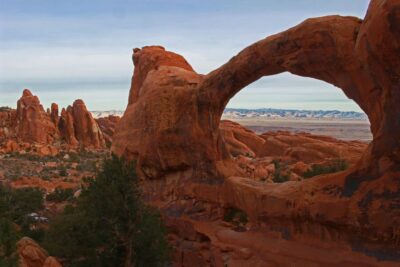
Double Arch is presented as one spectacular arch moment when you want it—and it’s positioned within the Windows area logic. The tour notes that Windows is a must-see section because it has several features in a small space and is connected by easy walks.
This is the kind of stop that works for mixed groups. Someone who wants steps can do the walks; someone who wants to stay close can still see plenty.
Stop 6: Windows (the framed-feel arches)
The Windows narration emphasizes the feeling of looking into another place through rock frames. It’s a quick win if your schedule is tight.
And because the audio is tied to GPS, you’re less likely to end up wandering through the wrong side of a parking area or missing which pull-off corresponds to which arch.
Canyonlands detours: Upheaval Dome, Aztec Butte ruins, and The Needles
Canyonlands can eat your time, so these optional stops are best for when you have momentum.
Stop 13: Upheaval Dome (mystery on the ground)
Upheaval Dome is described as mysterious and not fully explained. The narration covers possibilities—meteor impact vs. earth forces that thrust and collapse underneath—and it mentions the nickname Utah belly button.
This is one of those stops that feels like a story problem. Even if you don’t care about geologic debates, it adds a reason to stop besides just another view.
Stop 14: Aztec Butte Trail (Ancestral Puebloan granaries)
Aztec Butte is a 1.2 mile round trip hike to see ancestral Puebloan structures called granaries. It’s described as well marked, but the final steep section includes a slickrock climb.
If your group can handle that short scramble, you get a cultural stop that adds depth without needing a full-day detour. The tour also frames these ruins as among the more easily accessible Anasazi sites in Canyonlands, which is helpful when you’re deciding what’s worth your legs.
Stop 15: The Needles (spires, fewer crowds, scenic drive)
The Needles district is about 90 minutes south of Moab. It’s known for colorful Cedar Mesa Sandstone spires, and it generally receives far less visitation than Island in the Sky.
The tour also mentions a scenic approach on Highway 211 and petroglyphs at Newspaper Rock. It’s suggested as a great side trip if you have a spare day—or if you’re traveling between Moab and Mesa Verde, or heading toward the Grand Canyon.
If you have time, this is the kind of add-on that turns a basic Moab stop into a longer Utah story arc.
When this audio tour really shines (and when it doesn’t)
The strongest praise points in the tour’s concept are also the strongest indicators for you.
You’ll likely love it if:
- You want a private experience where you decide when to stop and when to skip.
- You like narration that keeps moving and gives you context without turning into a lecture.
- You’re time-limited and want help picking the right views instead of guessing.
- You want a format that can stretch across more than one day, since you can resume later and reuse it without a time limit.
A few practical considerations:
- If you rely on your phone heavily, battery management is not optional. Bring a USB/C car charger and charge before you start.
- If you’re the type to prefer physical maps and signs only, the audio will feel like one more step. Still, it can reduce backtracking by making you aware of what’s next.
- Like all apps, technical hiccups can happen. One user had trouble getting the app working and still enjoyed the scenery—so your backup is simply planning to drive, stop, and read signs even if the audio misbehaves for a moment.
My practical game plan for a smooth Arches + Canyonlands day
Here’s a simple approach that fits the way this tour is structured.
- Start early enough that you can do Mesa Arch sunrise if that’s your thing. If not, plan your Island in the Sky portion around sunset timing.
- Use Arches for arch density and classic “names.” Do The Windows, then Delicate Arch. Add Park Avenue if your legs are okay.
- Put one hiking stop in the middle of the day: either Devils Garden or Park Avenue continuation. Don’t stack two moderate hikes unless your group is fit.
- For photography, treat Skyline Arch and Mesa Arch as light-dependent moments. The audio gives timing hints—listen to them, then adjust your parking like a photographer, not like a tourist rushing through.
And one small trick: when you reach a stop, pause before walking. Let the narration finish the setup so you know where to look, what to photograph, and what’s worth your time.
Should you book this Moab self-guided audio tour?
Book it if you want a cost-effective way to cover Arches and Canyonlands with less guessing, and you like the idea of auto-playing stories and directions that match where you are right now.
Skip it (or at least treat it as optional) if you already know the area well, you prefer a ranger-style talk or a live guide, or you’re worried about phone battery/GPS working perfectly every step of the day.
If you’re traveling with a group up to eight, this is one of the rare “everyone benefits” purchases. One phone, one narration system, and you still keep control of your pace.
FAQ
Is this tour self-guided, or do I get a live guide?
It’s self-guided. The audio commentary plays automatically based on your location using your smartphone’s GPS.
Do I need internet or cell service during the tour?
You can download the tour for offline use. Once downloaded, the tour can be used without internet or cell service.
Are national park entrance fees included in the price?
No. Entrance fees and national park passes are not included.
How much does it cost, and how many people can use one purchase?
It costs $24.99 per group and covers up to 8 people in the same group.
How long does the tour take?
The duration is listed as about 8 hours to 1 day.
What language is the narration offered in?
The tour is offered in English.
Can I cancel if my plans change?
Yes. Cancellation is free up to 24 hours in advance for a full refund, and there is no refund if you cancel within 24 hours of the start time.
Drive It Yourself
- Arches National Park Self-Guided Driving Audio Tour
★ 4.5 · 288 reviews - Arches and Canyonlands NP Self-Guided Driving Audio Bundle Tour
★ 4.5 · 68 reviews - Canyonlands National Park Self-Guided Driving Audio Tour
★ 4.5 · 54 reviews - Full-Day Audio Driving Tour of Arches National Park
★ 4.5 · 27 reviews - Utah Mighty 5 National Parks Self-Guided Driving Audio Tours
★ 4.5 · 25 reviews
More of Canyonlands
- Canyonlands National Park Half-Day Tour from Moab
★ 5.0 · 1,074 reviews - Canyonlands National Park Backcountry 4×4 Adventure from Moab
★ 5.0 · 458 reviews - Discover The Best Of Moab In A Day: Arches Canyonlands Dead Horse
★ 5.0 · 327 reviews - Canyonlands National Park Needles District by 4×4
★ 5.0 · 298 reviews - From Moab: Full-Day Canyonlands and Arches 4×4 Driving Tour
★ 4.9 · 289 reviews
More Ways Into Arches
- Arches National Park 4×4 Adventure from Moab
★ 5.0 · 2,014 reviews - Arches National Park Back Country Adventure from Moab
★ 5.0 · 633 reviews - HIGHLY RATED Arches National Park Sightseeing Tour From Moab Utah
★ 5.0 · 474 reviews - From Moab: Half-Day Arches National Park 4×4 Driving Tour
★ 4.8 · 440 reviews - Discover The Best Of Moab In A Day: Arches Canyonlands Dead Horse
★ 5.0 · 327 reviews
Fresh Off the Trail: Newest Moab Reviews
- Discover Moab Rappelling on a Private Canyoneering Adventure
★ 5.0 · 3 reviews - Moab Custom 4 Seat Kawasaki KRX® 1000 Off Road UTV Rental
★ 5.0 · 3 reviews - Moab: Half-Day Rock Climbing Adventure
★ 5.0 · 3 reviews - Moab Half Day Kayaking Trip – Colorado River
★ 4.6 · 3 reviews - From Moab: Rock of Ages Moderate Rappelling Obstacle Course
★ 5.0 · 3 reviews - Professional Stargazing in Moab
★ 3.5 · 3 reviews
Arches National Park Tours, compared.
 ★ 5.0Arches National Park 4×4 Adventure from MoabFrom $1962,014 reviews
 ★ 5.0Arches National Park Back Country Adventure from MoabFrom $210633 reviews
 ★ 5.0HIGHLY RATED Arches National Park Sightseeing Tour From Moab UtahFrom $149474 reviews
 ★ 4.8From Moab: Half-Day Arches National Park 4×4 Driving TourFrom $196440 reviews
 ★ 5.0Discover The Best Of Moab In A Day: Arches Canyonlands Dead HorseFrom $399327 reviews
 ★ 4.9From Moab: Full-Day Canyonlands and Arches 4×4 Driving TourFrom $337289 reviews
 ★ 4.5Arches National Park Self-Guided Driving Audio TourFrom $16288 reviews
 ★ 5.0Arches and Canyonlands 4X4 Adventure from MoabFrom $336234 reviews
Browse the lists this tour appears in