
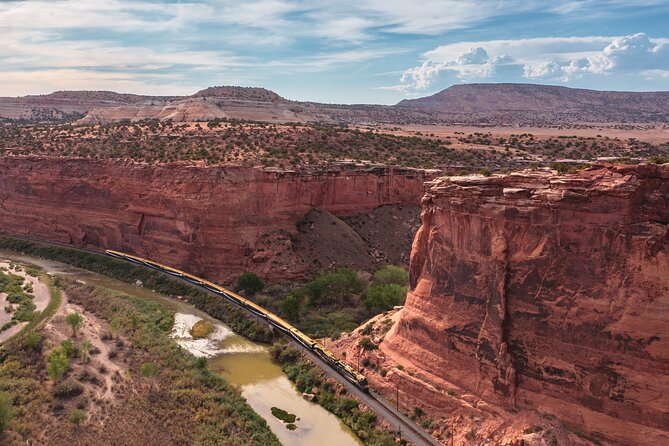
Reviewed · MOAB
Rockies to the Red Rocks Train – Moab to Denver – SilverLeaf Plus
Forget driving. This rail route does it better.
This two-day, rail-only journey from Moab to Denver is built for people who want big western scenery without the hassle of stopping, parking, and rerouting. I especially like SilverLeaf Plus for its lounge-car access and seat service, and I like that meals and drinks come right to your seat while the train threads through Utah’s red-rock country and Colorado canyons.
One watch-out: this route is designed for seeing major sights from the train window, not touring them on foot. You pass by places like Arches National Park, ghost-town areas, and other points of interest without stops, so it’s best if you’re happy with photos and views instead of hikes.
In This Review
- What Makes Rockies to Red Rocks (Moab to Denver) Worth Your Time
- SilverLeaf Plus: Lounge Car Access, Drinks, and Less Fuss
- Day 1 in Motion: Moab, Arches Country Pass-Bys, and the Ghost-Town Thread
- Moab: Your Starting Point in the Might-5 Gateway
- Arches National Park (You’ll See It, Not Exit for It)
- Thompson Springs and Cisco: Ghost Town Atmosphere From Your Window
- Ruby Canyon, Fruita, and the Colorado River Thread
- Palisade, New Castle, and the Lead-In to Glenwood Springs
- Arrival in Glenwood Springs: Hot Springs or a Reset
- Glenwood Springs Overnight: Why the Midpoint Hotel Works
- Day 2: Glenwood Canyon, Gore Canyon, Moffat Tunnel, and Denver Arrives
- Glenwood Canyon: Big, Scenic, and Hard to Forget
- Gore Canyon: The Cliff-Shadow Section
- Byers Canyon and the River-Rafting Rhythm
- Winter Park and the Moffat Tunnel: Continental Divide Crossing
- Gross Reservoir Dam, Boulder, and the Flatirons in the Distance
- Big 10 Curve: Rail Math You Can Feel
- Denver Evening: Lower Downtown Historic District
- Price and Value: What $2,327 Buys You (and What It Doesn’t)
- Comfort, Service, and the Human Touch (The Part You Feel Most)
- Who Should Book, and Who Might Want a Different Route
- Should You Book Rockies to the Red Rocks, Moab to Denver (SilverLeaf Plus)?
- FAQ
- How long is the train journey from Moab to Denver?
- When do you start in Moab?
- Where do I meet the tour in Moab?
- Is food included?
- What does SilverLeaf Plus include?
- Does the train stop at Arches National Park?
- Is WiFi available onboard?
- How does luggage handling work?
- Are there limits on luggage weight and pieces?
- What if the trip is canceled due to weather?
What Makes Rockies to Red Rocks (Moab to Denver) Worth Your Time
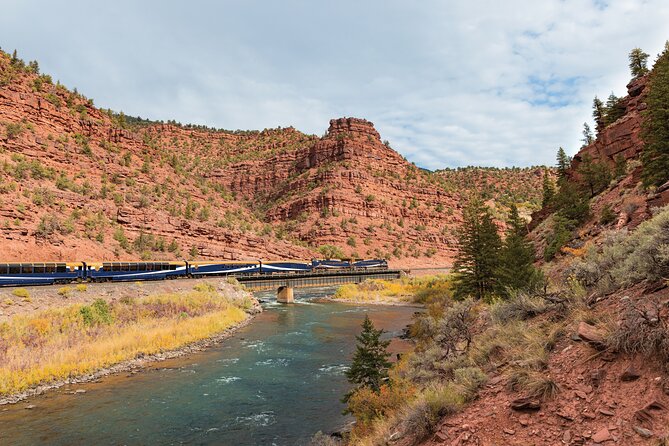
Rockies to the Red Rocks is one of those trips where the “activity” is the journey itself. Instead of switching between a car and roadside stops, you settle in and let the route do the work—especially on Day 1, when you move through a chain of canyons and red-rock country that’s usually hard to experience in one easy flow.
The other reason I like this itinerary: it pairs the dramatic desert edge of Utah with the Colorado River canyon system, then finishes in the Denver area. You get a true change of scenery, not just different angles of the same highway drive.
Finally, the service style matters. On SilverLeaf Plus, you’re not just riding in comfort. You’re also in the small-group rhythm that makes the whole trip feel calm—whether that’s a host checking in, stories fired off between meal courses, or help with luggage transfers.
Not sure yet? Stack this one up against a few Moab favorites before you book.
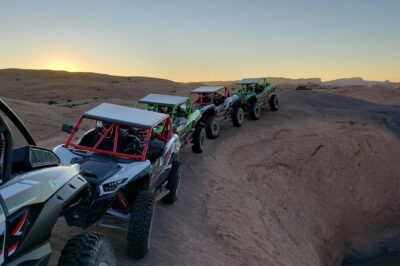
- HIGHLY RATED U-DRIVE Moab Hell’s Revenge UTV Off-Road Adventure★ 5.0 · 3,107 reviews
- Arches National Park 4×4 Adventure from Moab★ 5.0 · 2,014 reviews
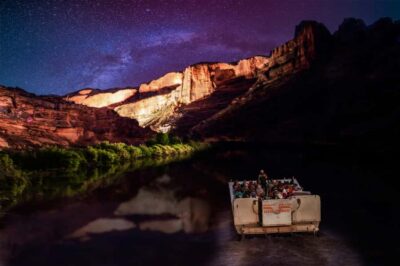
- Moab: Colorado River Dinner Cruise with Music and Light Show★ 4.5 · 1,302 reviews
- You-Drive 4×4 UTV Adventure–Hell’s Revenge & Fins N’ Things, Moab★ 5.0 · 1,114 reviews
SilverLeaf Plus: Lounge Car Access, Drinks, and Less Fuss
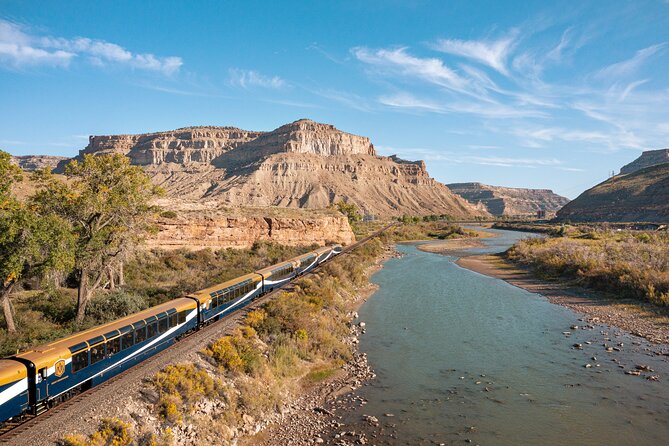
If you’re considering the SilverLeaf Plus upgrade, this is where the value is most obvious.
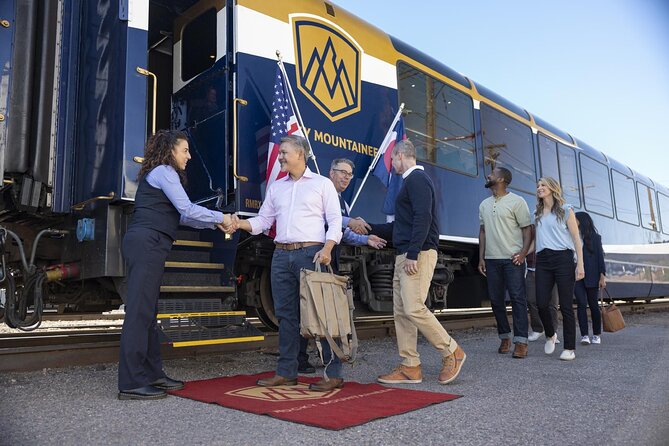
In SilverLeaf Plus, you get exclusive access to a lounge car with extra space to stretch out. You also get a small outdoor viewing area, which is great when you want a quick air-and-photos break without constantly changing seats.
The other perk is the drink service. This level includes premium alcoholic beverages plus signature cocktails. That doesn’t mean you have to drink to enjoy it—it just means your options are stronger and you’re not stuck with the basic default choices.
Comfort details matter too. The reviews you shared repeatedly point to roomier seating, strong climate control (perfect for long rail days), and the lounge car being the spot people kept returning to after meals. One person even described the lounge car as the place they stayed in most of the time besides eating, which tells you how good the “don’t move much” factor is.
Day 1 in Motion: Moab, Arches Country Pass-Bys, and the Ghost-Town Thread
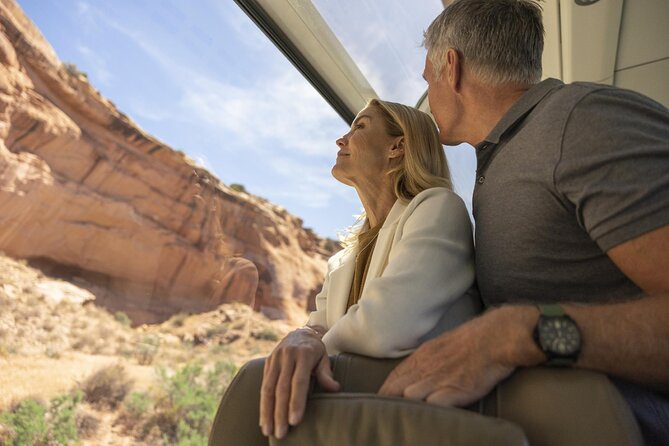
You board in Moab in the afternoon, with the meeting point at Rocky Mountaineer Moab Guest Centre, 59 S Main St, suite 3. The listed start time is 2:00 pm, and the route begins immediately with that classic red-rock feel: huge cliffs, layered rock colors, and a horizon that makes the window feel like a movie screen.
Moab: Your Starting Point in the Might-5 Gateway
Moab is the gateway to several Utah national parks, and the trip leans into that vibe right away. After boarding, you’ll have locally inspired dinner, snacks, and complimentary beverages served onboard.
This is a smart setup if you’ve been traveling earlier in the day. Instead of forcing an immediate park plan, you let the train ease you in.
Arches National Park (You’ll See It, Not Exit for It)
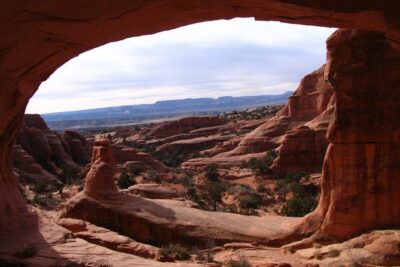
One of the biggest “wow” sections is also the most important to understand: the train passes by Arches National Park without stopping. You’ll still get views of signature red-rock shapes as you travel through the region, and in the distance you may see the La Sal Mountains, a major Utah range.
Why this matters: if you’re the type who wants to walk among arches, you’ll need a different add-on plan on your own. But if you want the feeling of Arches country from a comfortable seat, this part delivers.
Thompson Springs and Cisco: Ghost Town Atmosphere From Your Window
You also pass through two lesser-known ghost-town areas—Thompson Springs and Cisco, Utah—again with no train stops.
Thompson Springs is tied to an archaeological place called the Thompson Wash Rock Art District, listed on the National Register of Historic Places. Cisco is described as a former watering stop for steam engines, later hit by the shift away from steam and the construction of Interstate 70. One of your shared accounts also called out how this area shows up in popular culture, which is fun if you like that kind of clue-hunt while you ride.
Practical tip: if you want to remember details from places you can’t exit, keep your phone charged and take a few wide shots. The train moves through these areas at a pace you can’t replicate on foot.
Ruby Canyon, Fruita, and the Colorado River Thread
From there, the route shifts along the Colorado River system. Ruby Canyon is notable for its 25-mile stretch and the fact that it’s otherwise hard to reach—your window view is basically the “easy access” version.
You’ll also pass near Fruita, known for dinosaur fossils and for Mike the Headless Chicken, with a festival held each May in his memory. Then you continue through Grand Junction, a major fruit-growing area at the confluence of rivers in western Colorado.
Palisade, New Castle, and the Lead-In to Glenwood Springs
As you keep moving east, you pass Palisade, famous for peaches and its wine region, plus the dramatic cliffs that frame the area. After that, the train continues through New Castle, where the Colorado River runs through town and the region is tied to fishing, rafting, and kayaking.
All of this matters because it builds the story: Day 1 isn’t just scenery. It’s a chain of how people and industries used the waterways and canyons—then, at the end of the day, you settle in for the Glenwood Springs overnight.
Arrival in Glenwood Springs: Hot Springs or a Reset
In the evening, you arrive in Glenwood Springs and disembark. You can take the complimentary motorcoach transfer if your hotel isn’t within easy walking distance, and you can also choose to soak in the Glenwood Springs Hot Springs if you’re in the mood to stretch out.
One practical note from the trip style: you’re not doing heavy planning that night. This is the breather that keeps Day 2 enjoyable.
Glenwood Springs Overnight: Why the Midpoint Hotel Works
This trip includes one night of accommodation in Glenwood Springs. The hotel is described as moderate, clean, and comfortable with essential amenities and strong service.
Here’s why I think this overnight stay is a smart part of the itinerary: it prevents the common “rail trip fatigue” problem. Two full days back-to-back without a reset can feel long. But with the Glenwood break, you can wash up, recharge, and come back ready for the canyons-to-Continental-Divide finale.
Also, your luggage handling is built in. The included services cover luggage transfers to and from your midpoint accommodations, so you don’t have to guess how all the moving pieces connect.
Day 2: Glenwood Canyon, Gore Canyon, Moffat Tunnel, and Denver Arrives
Day 2 starts with your departure from Glenwood Springs. You’ll have a two-course hot breakfast with locally sourced ingredients as you head through the next set of canyon highlights.
You’re traveling southwest-to-east again, but the scenery shifts into a more dramatic canyon sequence.
Glenwood Canyon: Big, Scenic, and Hard to Forget
Leaving Glenwood Springs, you enter Glenwood Canyon, described as the largest in Upper Colorado and one of the most scenic natural features in the United States.
This is one of those segments where the value of rail shows up. Driving gives you stops and distractions. By train, you keep eyes on the walls and the river corridor for long stretches.
Gore Canyon: The Cliff-Shadow Section
Next is Gore Canyon, with dramatic over-1,000-foot cliffs. Your route notes two sections (Upper and Lower) and describes the drop toward the Colorado River, plus the fact that this is a challenging rafting stretch with Class 4 and 5 rapids.
Again: no stopping. You’re experiencing it the way most people wish they could—without hiking in, and without trying to time traffic.
Byers Canyon and the River-Rafting Rhythm
You then pass Byers Canyon and continue along the Colorado River, including the broad reputation for whitewater rapids. Your route notes that you’ll see rafters, and there’s even mention of rafters greeting trains in their own way.
This is a great moment to slow down and watch. Even if you don’t understand the river sports culture, you’ll get the rhythm: the river runs things, and people adjust their day around it.
Winter Park and the Moffat Tunnel: Continental Divide Crossing
You’ll see Winter Park, tied to the Denver Mountain Parks system and described as Denver’s winter playground. Then you pass through the Moffat Tunnel, cutting through 6.2 miles of mountainous terrain as the train crosses the Continental Divide.
This part feels like the trip changing gears—from desert-and-canyon drama to mountain engineering and elevation.
Gross Reservoir Dam, Boulder, and the Flatirons in the Distance
Next you get views of the Gross Reservoir Dam as you gain elevation. Then you pass with Boulder, Colorado in the distance, including the Flatirons, described as remnants of older mountains eroded down into an inland sea that shaped the Great Plains.
If you like places with a strong sense of identity (and you don’t want to leave your seat), this is one of the payoff segments.
Big 10 Curve: Rail Math You Can Feel
Before you reach Denver, the train travels along the Big 10 Curve, with tight 10-degree radius curves designed to keep the grade at about 2%. If you’ve ever been on a steep grade train section, you can feel how this engineering choice affects comfort.
Then you’re transferred by motorcoach through the RiNo (River North Art District) area, known for creative businesses and street art murals, and you finish at Denver Union Station.
Denver Evening: Lower Downtown Historic District
After arriving in Denver, you have time to explore the Lower Downtown Historic District. The info notes live music and lots of food options nearby, so you can keep the evening flexible instead of being locked into a schedule.
Price and Value: What $2,327 Buys You (and What It Doesn’t)
At $2,327 per person for a roughly two-day experience, you’re paying for a specific kind of convenience: rail-only scenic access, onboard hosting, and a service system that handles food, luggage, and transfers.
Here’s what that cost covers in a straightforward way:
- Meals: lunch and dinner on Day 1, and breakfast on Day 2
- One night in Glenwood Springs
- Luggage handling and transfers between the midpoint accommodations
- Motorcoach transfers from a central destination to train departure location
- Restroom on board
- Hosts and onboard storytelling, plus gratuities
And here’s what’s not included:
- Pre and post trip lodging
- WiFi on board
- Airfare or connecting transportation
For value, the biggest question is: do you want to see this specific western scenery without driving yourself? If yes, the price starts to make sense because the itinerary is “managed” end-to-end. If you’re the type who wants to hop out for short walks or long hikes multiple times a day, the rail-only pass-through nature may feel restrictive.
Also, one shared point from your reviews: the food is described as gourmet and delicious, but in at least one account it wasn’t served piping hot. That won’t bother everyone, but it’s worth setting your expectations so you don’t feel surprised.
Comfort, Service, and the Human Touch (The Part You Feel Most)
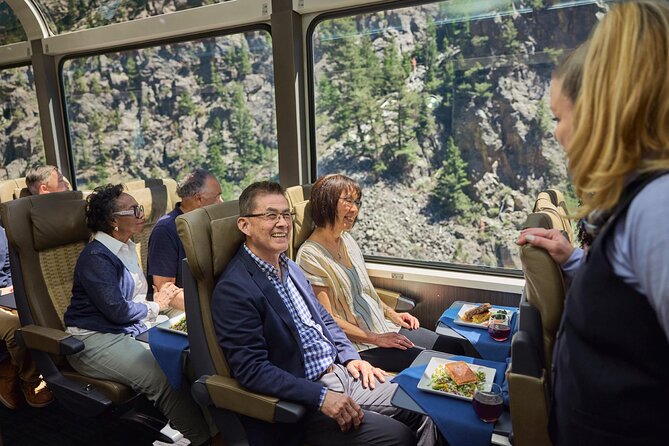
This is a service-forward train. Your shared experiences repeatedly mention hosts who made the ride feel personal and efficient.
Names that came up include Mike and Joey (with supportive service from Carol), plus a strong list of onboard team members like Tristan, Jessica, Sabina, Lacey, Olivia, Teresa, Neal, Leigh, Nephi, Crystal, Rae, Dillon, Sophia, and Shane. The pattern is consistent: people focused on attentive service, good timing, and storytelling that turns the scenery into something you can picture later.
One practical takeaway for you: on a train like this, you’ll remember how it felt as much as what you saw. If you care about hosts who keep things moving smoothly, SilverLeaf Plus seems like the sweet spot.
Comfort notes from reviews also align with what you’d want in long windows of time: leg room, air conditioning, roomy seating, and the lounge car as the go-to spot.
Who Should Book, and Who Might Want a Different Route
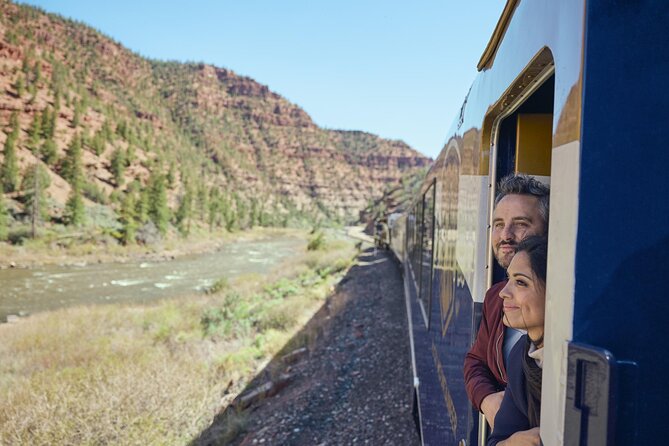
This itinerary fits well if you:
- Want dramatic western scenery without driving
- Enjoy views more than frequent stops
- Like the idea of an overnight midpoint stay that reduces fatigue
- Appreciate upgraded comfort like lounge-car access and better drink options
I’d hesitate if you:
- Need lots of on-the-ground time to hike or explore
- Get restless when you can’t get off at specific sites
- Are expecting a full “walk-the-park” style itinerary
The train passes many notable areas without stopping, including Arches National Park-related views, ghost-town areas, and canyon segments. You’re buying the rail window experience.
Should You Book Rockies to the Red Rocks, Moab to Denver (SilverLeaf Plus)?
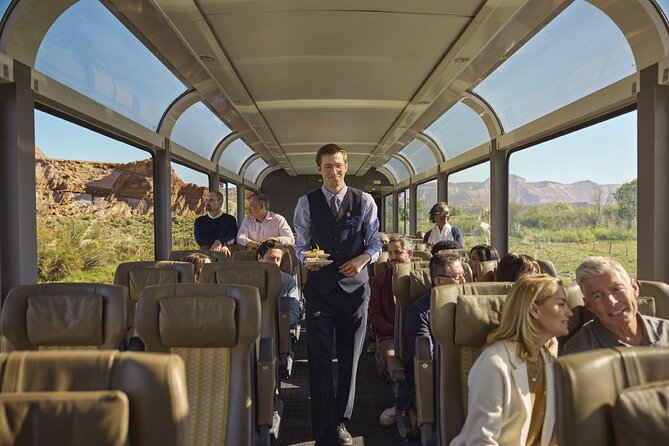
Book it if your dream is simple: canyon and desert views, served with calm, good food, and a lounge car that keeps you comfortable for long stretches. The SilverLeaf Plus upgrade adds real value through lounge access, outdoor viewing, and premium drink service.
Don’t book it if your travel style depends on frequent stops and walking around. This is a pass-through ride, not a guided walking tour. If that’s okay with you, you’ll probably love the way the route strings together desert-red rock, river canyon drama, and Denver’s city finish.
FAQ
How long is the train journey from Moab to Denver?
The experience runs for about 2 days.
When do you start in Moab?
Boarding starts at 2:00 pm in Moab.
Where do I meet the tour in Moab?
The meeting point is Rocky Mountaineer Moab Guest Centre, 59 S Main St, suite 3, Moab, UT 84532.
Is food included?
Yes. Lunch and dinner are included, and you also get a two-course hot breakfast on Day 2.
What does SilverLeaf Plus include?
SilverLeaf Plus includes exclusive lounge car access, a small outdoor viewing area, and premium alcoholic beverages plus signature cocktails.
Does the train stop at Arches National Park?
No. The train passes through that area and does not stop.
Is WiFi available onboard?
WiFi is not included.
How does luggage handling work?
Luggage transfers are included, and you have complimentary luggage handling to and from your midpoint accommodations.
Are there limits on luggage weight and pieces?
Yes. You can bring up to two pieces per person, with total weight not to exceed 30 kg (60 lbs), and no single piece over 23 kg (50 lbs).
What if the trip is canceled due to weather?
The experience requires good weather. If it’s canceled due to poor weather, you’ll be offered a different date or a full refund.
More Tour Reviews in Moab
- HIGHLY RATED U-DRIVE Moab Hell’s Revenge UTV Off-Road Adventure
★ 5.0 · 3,107 reviews - Arches National Park 4×4 Adventure from Moab
★ 5.0 · 2,014 reviews - Moab: Colorado River Dinner Cruise with Music and Light Show
★ 4.5 · 1,302 reviews - You-Drive 4×4 UTV Adventure–Hell’s Revenge & Fins N’ Things, Moab
★ 5.0 · 1,114 reviews - Canyonlands National Park Half-Day Tour from Moab
★ 5.0 · 1,074 reviews
Fresh Off the Trail: Newest Moab Reviews
- Discover Moab Rappelling on a Private Canyoneering Adventure
★ 5.0 · 3 reviews - Moab Custom 4 Seat Kawasaki KRX® 1000 Off Road UTV Rental
★ 5.0 · 3 reviews - Moab: Half-Day Rock Climbing Adventure
★ 5.0 · 3 reviews - Moab Half Day Kayaking Trip – Colorado River
★ 4.6 · 3 reviews - From Moab: Rock of Ages Moderate Rappelling Obstacle Course
★ 5.0 · 3 reviews - Professional Stargazing in Moab
★ 3.5 · 3 reviews